
Sources for West Covina Previous Residents
Different records cover different parts of the previous residents trail. Recorded documents show named parties to land instruments. Assessment data locates a parcel and can connect an owner through the official office route. Directories and census schedules show listed households. Permits date construction and changes. Newspapers, obituaries, probate, and archives can close a story after a person leaves an address.
| Source | Years It Covers | Where Held | What It Shows |
|---|---|---|---|
| Recorded real estate | 1850/1851-present | LA County RR/CC Norwalk | Grantor, grantee, instrument, date, legal parcel clues |
| Recorder index floor split | 1851-1957; 1958-present | Norwalk lower level; second floor | Name/year route to the recorded document |
| Pacific city directories | 1950 and 1955 verified | Regional libraries and research collections | Listed names, addresses, businesses, and directory-era clues |
| Federal census | 1940 and 1950 public schedules | NARA and partner databases | Named household, relationships, ages, and residence |
| West Covina permits and code files | Exact digital start not located | City departments or CPRA request | Work, dates, applicants, owners, or contractors as recorded |
| Newspapers, obituaries, probate | Varies by title and file | Libraries, archives, Superior Court | Moves, survivors, former address, estates, and community ties |
Choose the starting source by era. A recent address begins with the parcel and deed path. A postwar house may first appear in a permit or 1955 directory. A pre-subdivision parcel needs tract, lot, road, and county descriptions before a street search will work.
Start With Today's West Covina Owner
The current parcel is the anchor for previous residents. Search the Los Angeles County Assessor Portal by exact address or AIN and record the parcel position, use, year-built clues, tract or boundary description, and assessment dates. The public web result does not expose the owner name. Request owner information from an Assessor district office or the official Property Data Sales route, then keep the source date with the name.
A current mailing address may differ from the situs. That difference can suggest an off-site owner, but it does not prove who lives at the property. The deed's legal description is another identifier and can outlast a street label. Save the AIN, situs, mailing clue, tract, lot, and any former address before moving to the recorder.
Use the official Los Angeles County Assessor Portal and district-office information for the parcel-to-name bridge.
Reverse the West Covina Deed Chain
Los Angeles County RR/CC indexes deeds, deeds of trust, liens, reconveyances, notices, plats, and other recorded documents by name and recording year. The index is not online and cannot be searched by address or APN. At Norwalk, 1851-1957 materials are on the lower level and 1958-present on the second floor. Arrive with an owner name and likely year rather than an address-only request.
- Search the current owner as grantee, the person or entity receiving the purchase document.
- Open the likely deed and compare document number, recording date, grantor, grantee, deed type, legal description, and parcel or tract clues.
- Search the grantor as an earlier grantee. Repeat the step backward, checking same-name parties against the land description.
- Move to the lower-level collection for 1851-1957 material and preserve the year and floor route in the notes.
- Order a complete document through the county's online, mail, fax, appointment, or in-person channels when an image is needed.
- Grantor
- The party conveying or giving an interest in the recorded instrument.
- Grantee
- The party receiving the interest; often the starting role for a purchase deed.
- Chain of title
- The linked sequence of recorded transfers for one parcel.
- Legal description
- The land identity in the deed, such as a tract and lot, independent of postal wording.
The RR/CC real-estate access notice states the counter arrangement and the name/year indexing rule.
West Covina Recorded Copies and History
When a deed or other instrument is identified, the county's recorded-document copy route can supply the full document. The research record describes an online LexisNexis order, mail, fax, appointment, and in-person paths. Online processing may take up to 20 working days. The county requires purchase of the complete document rather than selected pages, and a current fee schedule should be checked before payment.
Recorded-document history also includes a countywide review of restrictive covenants from 1850 forward. The Restrictive Covenant Modification program creates a useful caution for house history: a current public image may be a modified or re-recorded version, while the instrument's earlier history and index trail still matter. Record the document number and title before comparing versions.
See the official recorded-document request page for the current copy channel.
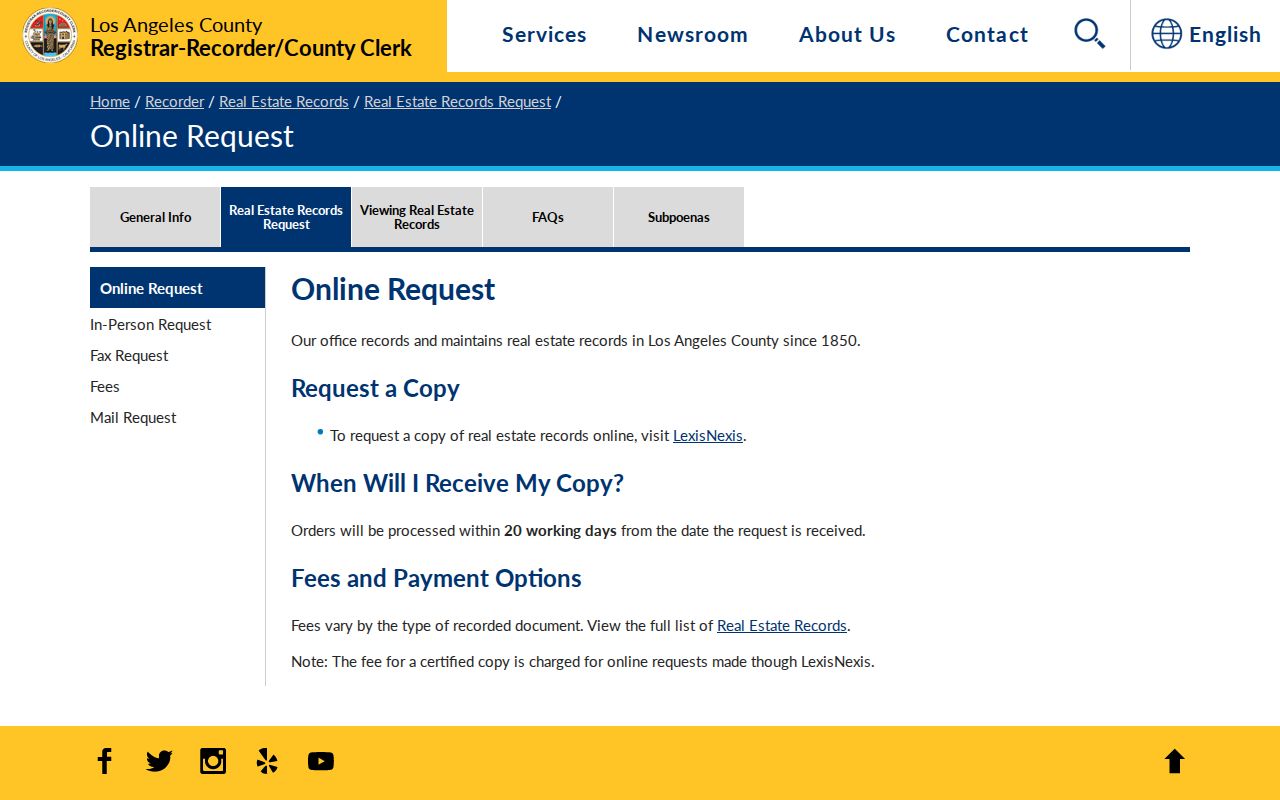
The copy request view shows the next step after the name-and-year index has identified the instrument.
Old Legal Descriptions in West Covina
Many modern West Covina addresses were created during postwar subdivision. West Covina incorporated in 1923, but county land records reach earlier and may use ranch, tract, lot, or nearby-community descriptions. A current street number may not appear in the earliest deed. Follow the legal description, AIN, adjacent roads, and tract clues through the chain before deciding that an old record is unrelated.
The street grid also changed around local development. Glendora Avenue marks a shift in orientation toward Baldwin Park. Highway 99 became Garvey Avenue in 1935, and the 1955 Interstate 10 construction split Garvey into North and South forms. Search the period road name, nearby crossroads, and parcel description. Postal city labels can move between West Covina, Covina, Baldwin Park, La Puente, or Los Angeles County while the land trail remains continuous.
Note: A legal description can keep a parcel connected across a street rename, subdivision, annexation, or changed postal city.
The county's restrictive-covenant modification program is the historic recorded-document route shown below.
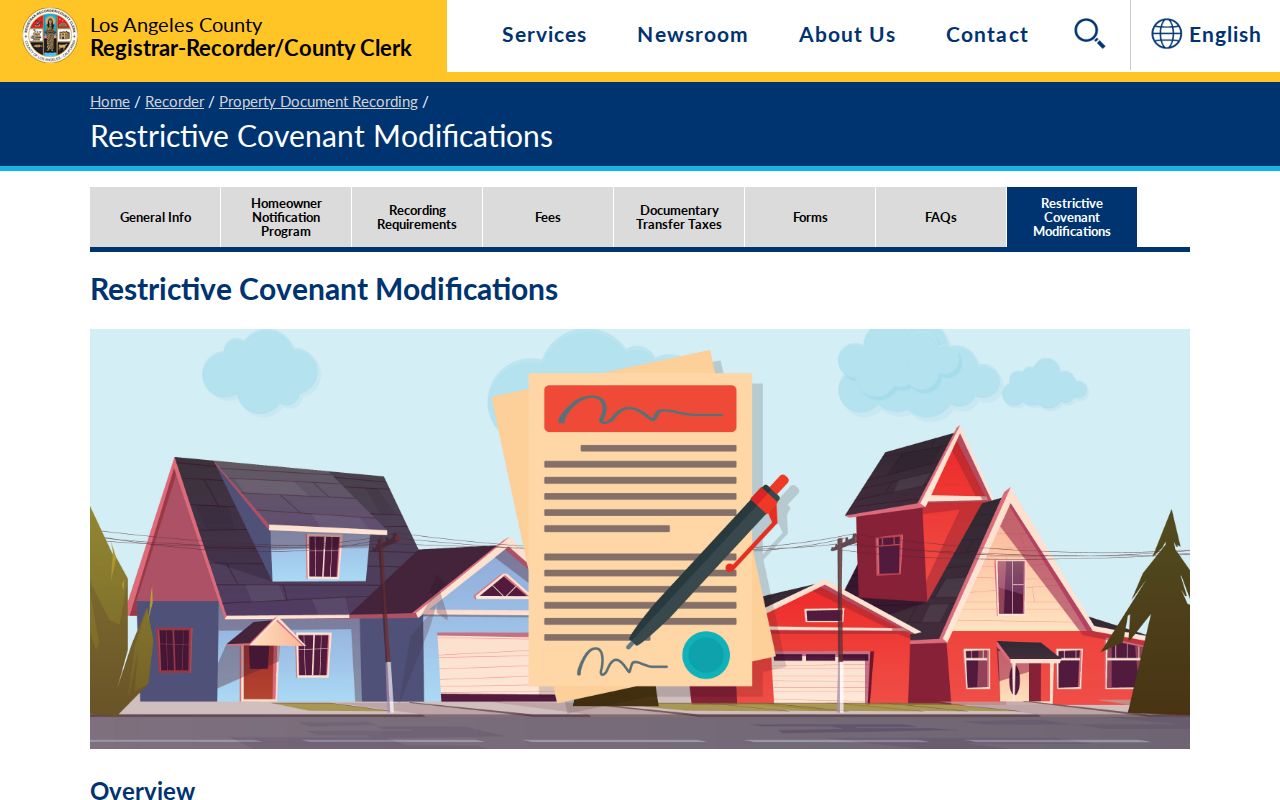
The county's historic-document review is a reminder to compare an instrument's title, date, and later modification history.
Past West Covina Households in Directories
Ownership is only one strand of previous residents research. The 1950 and 1955 Pacific Directory Co. volumes, regional telephone books, reverse sections, and local newspaper files can show a listed person or subscriber at an address. The West Covina Library has local-history help, microfilm equipment, and newspaper access. Its historical collection and the Historical Society should be asked about exact editions, tract files, address indexes, and the “Business and Commercial 1960-1980” clipping bin.
A directory absence has several possible explanations: the house was not built, the family moved, the name was spelled differently, a telephone was not listed, or the volume has a gap. Compare a 1955 entry with the 1950 census, a permit date, a deed, and a newspaper rather than choosing one explanation from silence.
The collection details belong to the West Covina city directory shelf; house-history work uses those volumes as dated evidence.
The California State Archives collections are the repository route shown below.
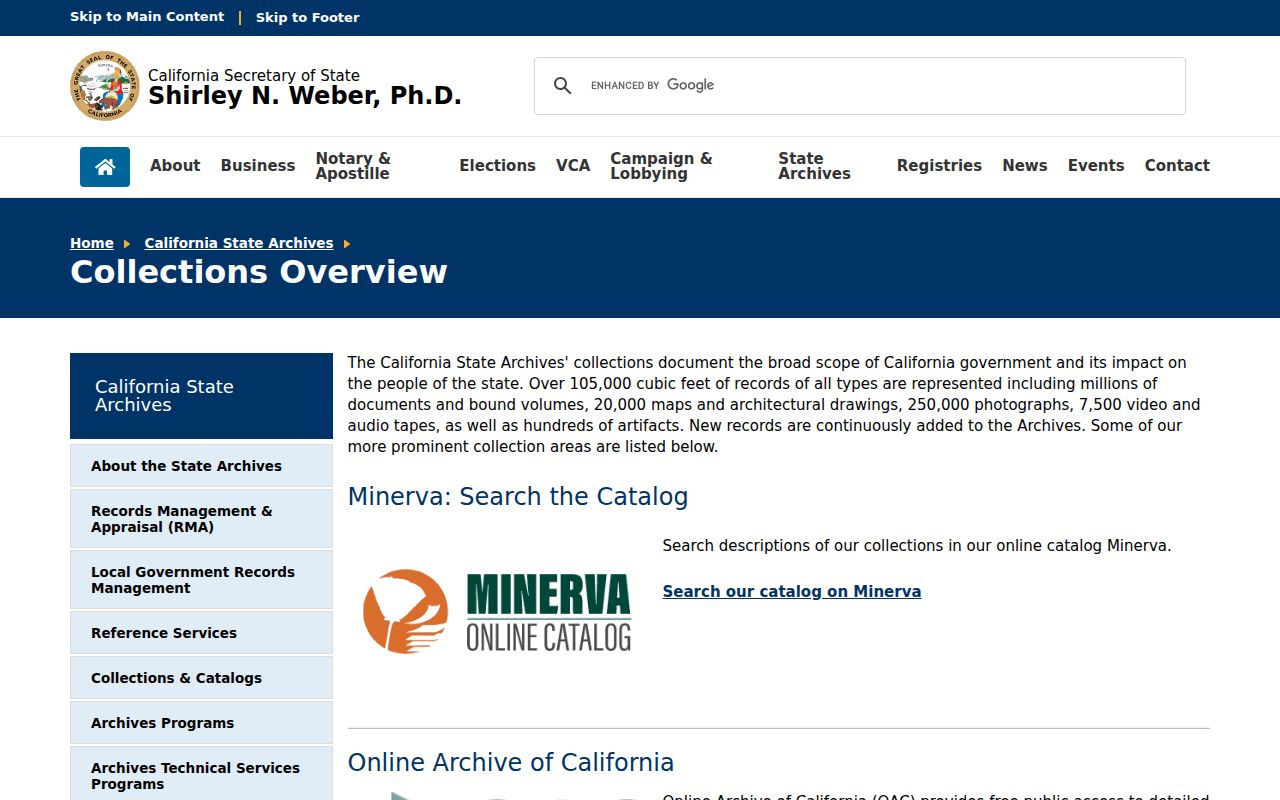
Archives can fill a gap when a local volume is missing, but a state catalog is a repository lead rather than a universal name index.
Pair West Covina Directories With Census
Federal census schedules provide named households through 1950 under the public release rule. NARA recommends using a city or telephone directory address to locate the enumeration district when name OCR fails. West Covina's 1950 finding-aid range is EDs 19-701 through 19-706. The census supplies household relationships, ages, and other schedule fields, while a city directory supplies a publication-year address, telephone, or public description.
- Choose the directory year closest to the census, such as 1950 or 1955, and write the exact street form.
- For a 1950 address, browse EDs 19-701 through 19-706 when a surname search does not find the household.
- Compare names, ages, relationships, and address clues. Keep a different initial or nearby street as an unresolved mismatch.
- Use the next directory, a newspaper, obituary, permit, or deed to test a move between the two snapshots.
This pairing is especially productive in West Covina because the population rose from 4,499 in 1950 to 50,645 in 1960. A modern tract may not exist in the 1950 schedule, while a 1955 directory can capture the first postwar occupants.
The LA Superior Court document-image route can help when an estate or probate file becomes the next step.
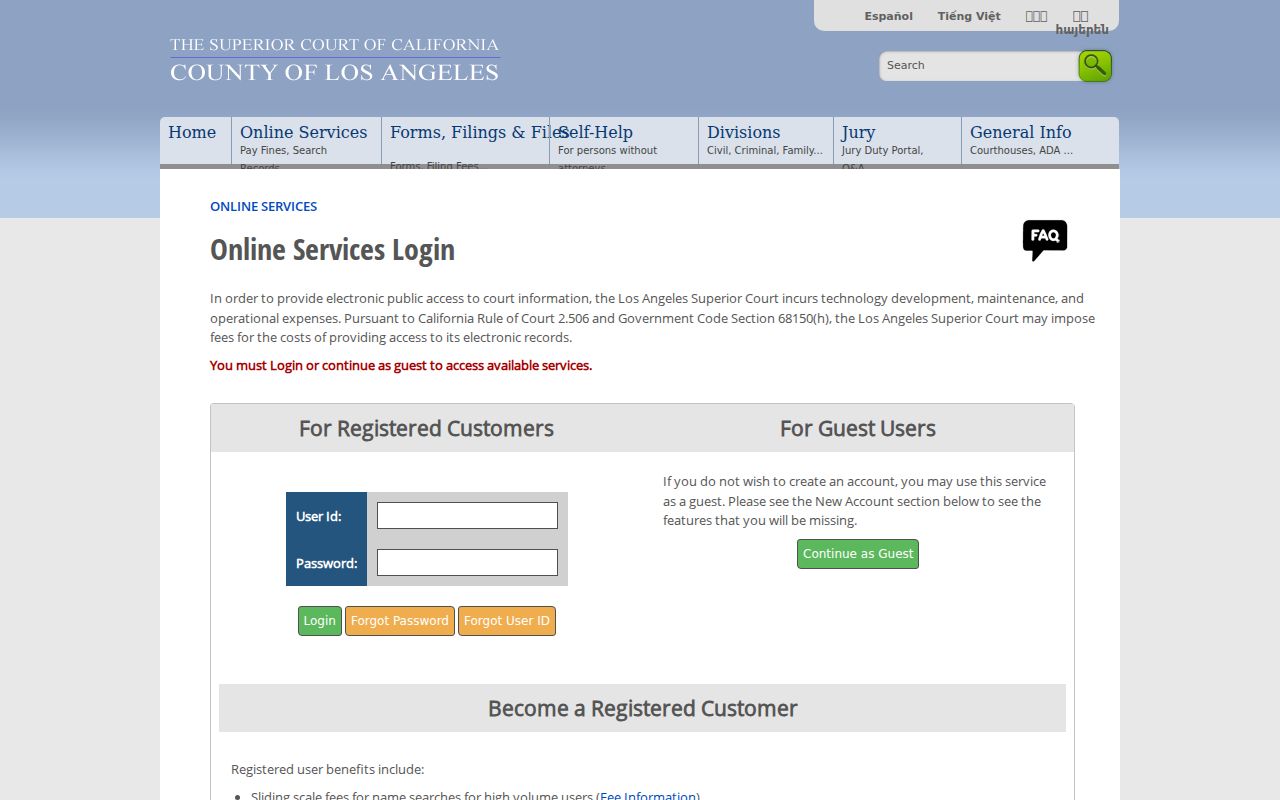
A court document image is a different source from a census or directory line. Note the case number and access level before using it in a house history.
West Covina Permits Date the House
West Covina permit and code files can explain when an address entered the built landscape. The City CPRA form asks for the property address, document description, department, and date range. A permit may contain an applicant, owner or owner-builder, contractor, scope, valuation, parcel, and dates. It can show construction or alteration evidence, but it does not automatically identify every previous resident.
The historic record cites Building Permit No. 31979 dated April 4, 1972. It also records a 1,050-square-foot minimum before 1953 and a 1,200-square-foot minimum after the 1953 change. Use such facts to place a property within a development era, not to infer a person from a building dimension. About 11,000 homes were built in the 1952-1956 wave, which explains many directory gaps.
Use the West Covina public-records request form for a focused address and date range. No open historical permit-results database with a verified start year was located.
Sanborn Maps Near West Covina
No standalone West Covina Sanborn edition was verified in the Library of Congress catalog. The documented fallback is to search nearby Covina, Baldwin Park, La Puente, and Los Angeles County geography, then inspect sheet boundaries and the period road network. West Covina remained orchards and sparse settlement well into the twentieth century, so an absent standalone sheet is plausible but not conclusive.
A map can date land use and building form without naming a household. Pair it with the Assessor year-built field, a first permit, tract map, directory, or deed. Record “not located” when the nearby sheets do not cover the target parcel. That is more useful than assigning a neighboring map to the wrong address.
Search the Library of Congress Sanborn Maps collection for the regional fallback.
West Covina Obituaries and Probate Endpoints
Obituaries can close a previous residents trail with a former address, survivors, dates, and community ties. The local newspaper chain runs from the San Gabriel Valley Daily Tribune in 1955 through current San Gabriel Valley Tribune titles, with predecessor weeklies that include West Covina Tribune. Library microfilm and archive catalogs need a date-specific inquiry because a holding record is not the same as an online issue.
Probate, wills, and estate case files belong to Los Angeles Superior Court, not the recorder or County Clerk. A probate file can connect an heir, a death date, and a property interest, but sealed or restricted material remains unavailable. County birth, death, and marriage copies have separate eligibility rules; use the custodian's route rather than a generalized request.
Preserve the full citation: person, date, newspaper or case, page or document number, address, and the reason the evidence connects to the parcel. That record makes the house-history conclusion reviewable.
The Los Angeles County birth-record request route is the source shown below.
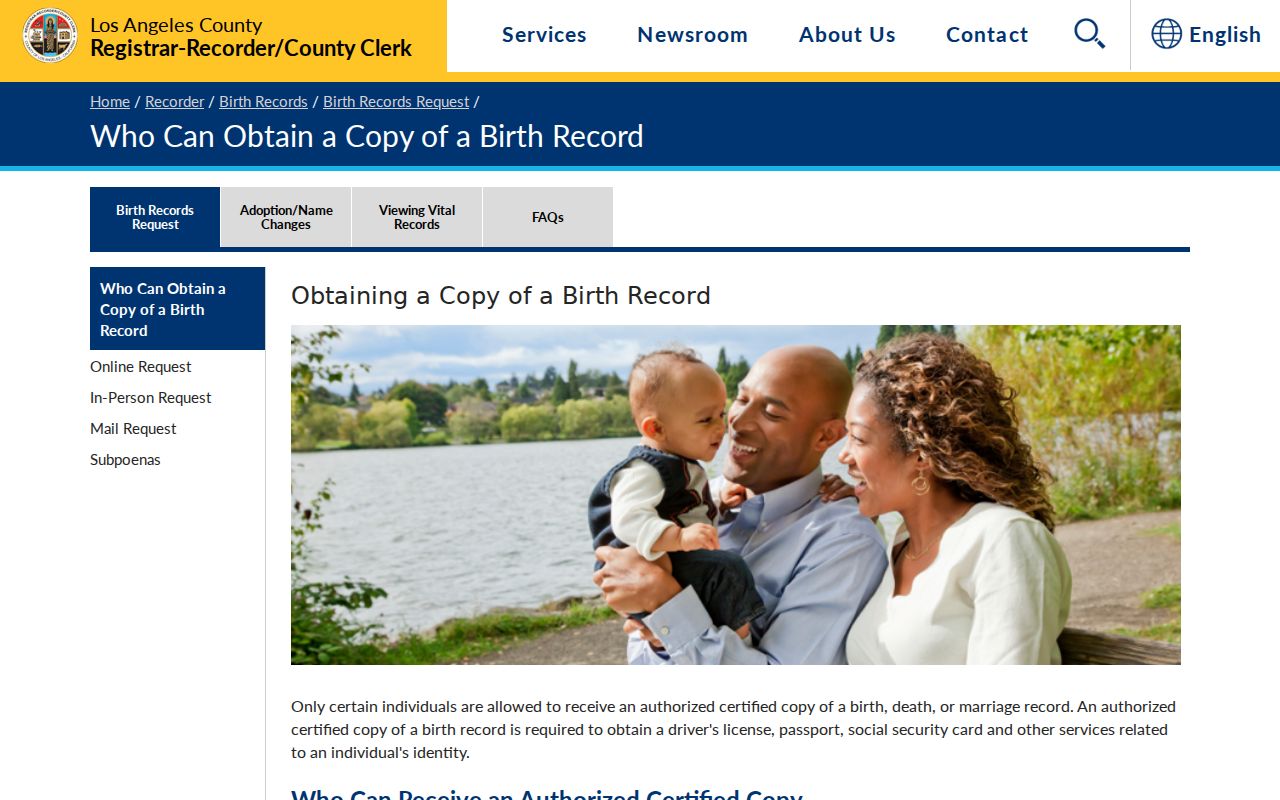
A vital-record request screen shows why an event record requires eligibility and copy type before it can support a family or house history.
West Covina Previous Residents: Lawful Use
House-history research is appropriate for genealogy, preservation, reconnecting, and personal curiosity. A deed chain can identify title parties. A directory can identify a listed occupant. A probate or obituary can document a later life event. None of those records grants permission to expose a private person's current address or to monitor someone after a move.
Lawful personal use. Use West Covina house-history records for family and civic research. Do not use a past address, name, or document trail to stalk, harass, intimidate, or harm anyone.
When a source is wrong, contact the custodian that created it. When the evidence is thin, say what is known and what remains unproved. The strongest previous residents account is a dated chain with the limitations left visible.